

ZYmining
-
Products
-
Application
When investing in a briquetting press for recycling biomass, metal chips, or industrial waste, the choice between hydraulic and mechanical systems is one of the most consequential decisions you will make. Each technology offers distinct trade-offs in output density, energy consumption, maintenance complexity, and operational cost. This article provides an unbiased, data-driven comparison of hydraulic vs mechanical briquetting machines, helping you evaluate which design aligns with your material characteristics, production volume, and budget. As a leading manufacturer in the field, ZYmining has field-tested both configurations across hundreds of installations; the insights shared here are based on real-world performance metrics rather than theoretical marketing claims.
A hydraulic briquetting machine uses a hydraulic cylinder driven by a pump to generate compression force. The ram moves slowly but with extremely high pressure—often exceeding 2000 psi—allowing it to densify materials that are difficult to compact, such as oily metal turnings or moist biomass. The system includes an accumulator and proportional valves to control pressure and stroke rate. Because hydraulic fluid absorbs shock, these machines handle variable feed consistency without mechanical damage.
Mechanical briquetting machines rely on a flywheel, eccentric mechanism, or screw press to deliver rapid, repetitive strokes. A large flywheel stores kinetic energy and releases it in a quick punch, creating briquettes at a much higher cycle rate (typically 50–200 strokes per minute) compared to hydraulic systems (1–5 strokes per minute). Mechanical presses are generally simpler in hydraulic circuit design but require precise mechanical alignment and heavier structural frames to withstand impact forces.
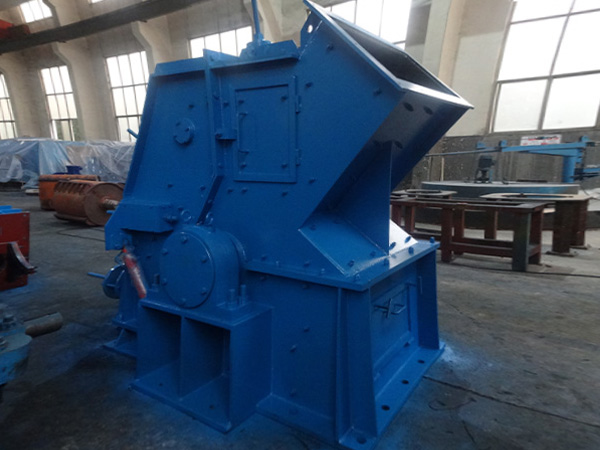
To facilitate decision-making, the table below summarizes the critical differences between hydraulic and mechanical briquetting machines across six key parameters. Following the table, each point is explained in detail.
If your feedstock is dry wood chips, sawdust, or shredded paper with moisture below 12%, a mechanical briquetting machine from ZYmining can deliver cost-effective output. For oily metal chips (steel, brass, aluminum), high-moisture biomass, or mixed industrial waste, hydraulic presses are strongly recommended—they prevent bridging and produce stable briquettes even with 15–20% moisture content.
For continuous three-shift operations processing 500+ kg/hour, mechanical presses offer a better ROI due to higher throughput and lower energy cost per ton. For small-to-medium batches (50–300 kg/hour) or intermittent use, hydraulic machines provide reliability with less need for rapid cycling.
Hydraulic systems require a technician familiar with hydraulic schematics and oil contamination prevention. In regions where such expertise is scarce, mechanical machines may reduce downtime. However, many ZYmining hydraulic models now include diagnostic displays and quick-change filter kits, simplifying maintenance.
Initial purchase price for mechanical presses is generally 20–40% lower than hydraulic equivalents of the same throughput class. But the total cost of ownership must factor in electricity, hydraulic fluid, spare parts, and labor. A life-cycle analysis over 10 years often shows the two technologies converging, with mechanical gaining an edge in high-volume dry applications and hydraulic winning in variable-feed scenarios.
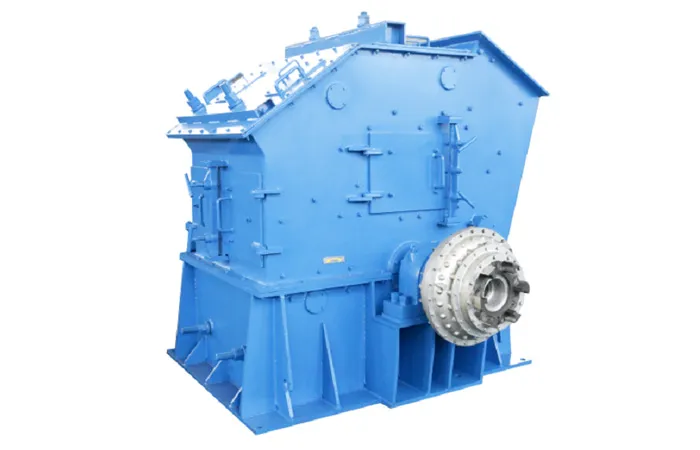
Hydraulic briquetting machines consistently produce briquettes with higher and more uniform density because pressure is held for several seconds. Mechanical presses have a shorter dwell time, resulting in slightly lower density (5–15% less depending on material). For applications where briquette integrity during transport is critical, hydraulic is the better choice.
Not easily. Mechanical presses lack the protective circuit to decelerate under overload. Attempting to compact oily chips can lead to clutch slippage, flywheel damage, or safety hazards. It is more economical to purchase a hydraulic unit like ZYmining's HY series specifically designed for wet/oil-saturated materials.
Both can operate 15–25 years with proper maintenance. Hydraulic machines often require a major overhaul (cylinder resealing, pump replacement) after 10–12 years. Mechanical presses depend on bearing and flywheel condition; main bearings typically last 8–10 years before needing replacement. ZYmining provides lifetime support for both platforms.
Choosing between hydraulic and mechanical briquetting machines is not about one being universally better—it is about matching the technology to your specific material, production goals, and operational environment. Hydraulic systems offer unmatched flexibility, quiet operation, and high briquette density, while mechanical presses deliver speed, energy efficiency, and lower upfront cost for dry, consistent feedstocks. ZYmining engineers are available to review your material sample and recommend a configuration that minimizes your total cost per briquette. Contact our team to schedule a consultation or visit our demonstration center for live testing.

Add: Luoxin Industrial Zone,Luoyang City,Henan Province P.R.C.
Tel: +86-379-67313306
E-mail: gloria@zyksjx.com

Official Agent of ZY MINING in Russia.
Please enter here.
Add: Luoxin Industrial Zone,Luoyang City,Henan Province P.R.C.
Tel: +86-379-67313306
E-mail: gloria@zyksjx.com