

ZYmining
-
Products
-
Application
In the briquetting industry, density is not just a technical parameter — it directly affects transportation cost, melting efficiency, combustion performance, and overall material value. Whether you are processing metal chips, biomass waste, or industrial residues, understanding what determines briquette density is essential for maximizing both productivity and profitability.
So what truly controls briquette density? And how can a briquetting machine be optimized to achieve consistently high-density output?
Let’s take a closer look inside the briquetting process.
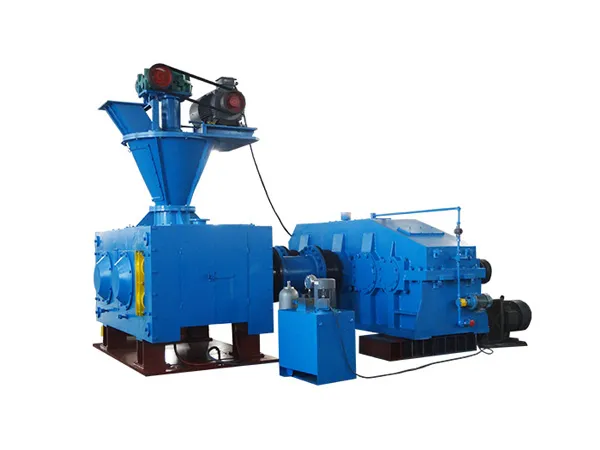
High-density briquettes offer several practical advantages:
Reduced storage space
Lower transportation costs
Higher melting yield (for metal chips)
Longer burning time (for biomass briquettes)
Improved handling and mechanical strength
In metal recycling plants, denser briquettes can significantly reduce oxidation loss during remelting. In biomass applications, higher density improves calorific value per unit volume. Density is therefore not only about appearance — it directly impacts operational economics.
The briquetting process begins with the raw material. No machine can compensate for unsuitable feedstock conditions.
Particle Size and Shape
Uniform and fine particles generally compress more efficiently than irregular or oversized fragments. For example:
Fine aluminum chips compact differently from long steel turnings
Sawdust behaves differently from coarse agricultural residues
Pre-processing steps such as shredding or crushing often play a decisive role in final briquette density.
Moisture Content
Moisture is one of the most critical factors.
Too dry → insufficient binding
Too wet → weak briquettes, internal cracks
For biomass briquetting, optimal moisture content is typically controlled within a specific range. For metal chip briquetting, excess cutting fluids must often be removed before compression.
Proper moisture control ensures stable compaction and higher density output.
At the heart of every briquetting machine is the compression system.
Higher pressure generally results in higher briquette density — but only up to a certain point. Excessive pressure may cause:
Premature wear of hydraulic components
Increased energy consumption
Structural stress on molds
Hydraulic briquetting machines are particularly effective because they provide stable, high-pressure output with precise control. Consistent pressure ensures that material particles rearrange tightly, minimizing internal voids.
The goal is not simply “maximum pressure,” but optimized and stable pressure.
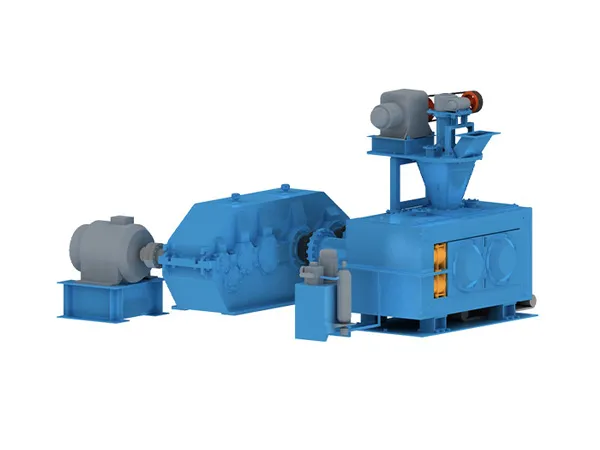
Even with ideal materials and pressure, density can fluctuate if the machine structure lacks rigidity.
Key Structural Factors:
Frame strength
Mold precision
Cylinder alignment
Hydraulic system responsiveness
A well-engineered briquetting machine maintains uniform pressure distribution during each compression cycle. Any misalignment or mechanical vibration can reduce briquette compactness.
Industrial-grade machines typically feature reinforced steel frames and precision-machined molds to ensure dimensional consistency and density stability.
Density is not achieved in a split second. Time under pressure matters.
During compression, materials require a short holding phase that allows particles to settle and internal air pockets to escape. Insufficient holding time can result in:
Surface cracks
Lower mechanical strength
Reduced final density
Advanced briquetting systems allow adjustment of:
Pre-press time
Main compression time
Pressure holding duration
Fine-tuning these parameters improves structural integrity and density consistency.
In biomass briquetting, heat plays a secondary but important role.
Under high pressure, friction generates heat, which softens natural lignin in biomass. Lignin acts as a natural binder, helping increase briquette strength and density.
If the temperature is too low, binding efficiency decreases. If too high, material degradation may occur.
Controlled compression combined with balanced friction ensures optimal densification.
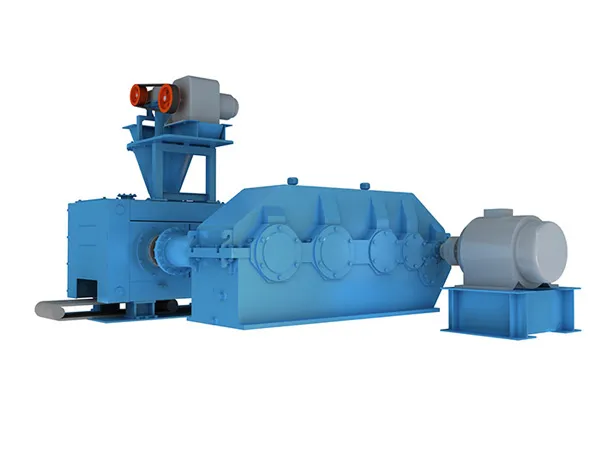
The mold or die cavity directly defines briquette shape and internal compaction.
Factors influencing density include:
Die diameter
Compression ratio
Surface finish of mold cavity
Ejection stability
A properly designed die maintains uniform internal pressure distribution. Poor die design may lead to uneven density across the briquette’s cross-section.
Professional briquetting machine manufacturers pay close attention to mold engineering, as it directly affects density, durability, and product consistency.
Manual intervention often causes density variation. Modern automated briquetting machines reduce fluctuations by maintaining:
Stable feed rate
Consistent pressure cycles
Real-time hydraulic monitoring
Automation ensures repeatability — a crucial factor for industries requiring standardized briquette weight and density.
Balancing Density and Efficiency
While higher density is generally desirable, it should not come at the cost of:
Excessive energy consumption
Increased equipment wear
Reduced production speed
The most efficient briquetting process strikes a balance between:
Raw material quality + Pressure control + Structural stability + Process timing
When these elements work together, high-density briquettes are produced consistently and economically.
Briquette density is not determined by a single variable. It is the result of an integrated system — material characteristics, machine design, hydraulic control, and operational precision all play a role.
For manufacturers looking to improve briquetting performance, the focus should not only be on “increasing pressure,” but on optimizing the entire briquetting process.
A well-designed briquetting machine, combined with proper material preparation and parameter adjustment, delivers dense, durable, and high-value briquettes — turning industrial waste into profitable resources.

Add: Luoxin Industrial Zone,Luoyang City,Henan Province P.R.C.
Tel: +86-379-67313306
E-mail: gloria@zyksjx.com

Official Agent of ZY MINING in Russia.
Please enter here.
Add: Luoxin Industrial Zone,Luoyang City,Henan Province P.R.C.
Tel: +86-379-67313306
E-mail: gloria@zyksjx.com