

ZYmining
-
Products
-
Application
Selecting a comminution route for hard rock is one of the most consequential decisions in a mining project. It fixes a large share of capital cost, determines how much energy the plant will consume for the next twenty years, and influences everything downstream from liberation to tailings behavior. High pressure grinding rolls, or HPGR, have moved from a niche technology to a mainstream option for hard, competent ores — but they are not a universal answer. This guide walks through the factors that decide whether HPGR belongs in your flowsheet, what to specify when it does, and how to compare it honestly against conventional SAG milling.
HPGR is not a crusher in the traditional sense. Two counter-rotating rolls press material into a compacted cake, and comminution happens through inter-particle compression rather than metal-to-rock impact. The practical consequences matter for hard ores:
For very hard, abrasive ores — porphyry copper, magnetite, certain gold and platinum ores — these advantages can shift the economics decisively. The caveat is that HPGR rewards good engineering and punishes shortcuts in ore testing and machine selection.

Not every hard rock performs well in an HPGR. Ore competency, abrasion index, moisture content, and the presence of clays or sticky fines all affect both throughput and roll wear. Bench-scale and pilot-scale test work on representative samples is not optional. Results determine the required specific pressing force, expected throughput, and the wear protection strategy.
HPGR is most attractive when the target is a relatively fine, well-prepared feed for ball milling or a coarse liberation stage. If your flowsheet only needs coarse crushing, an HPGR may be over-specified. If it needs ultra-fine grinding, HPGR is typically a pre-grinding stage rather than a replacement for the final mill.
Check power supply stability, available floor space, maintenance access, spare part logistics, and the skill level of the operating team. HPGR availability depends heavily on disciplined maintenance, not just on machine quality.
Insist on pilot-scale testing with a statistically representative sample, not just a single composite. Variability across the orebody — hardness domains, oxidation zones, transition material — drives the real design envelope. A machine sized for the average ore will underperform when the hard domain arrives.
Roll diameter and width set the theoretical throughput and the maximum feed size the machine can accept. Oversizing for future expansion is reasonable; oversizing to mask inadequate testing is not. The ratio between roll dimensions and feed top size should be reviewed against the vendor's proven operating references in comparable hard rock applications.
This is where operating cost is won or lost. Options include studded rolls with tungsten carbide pins, hardfaced profiles, and composite tyre systems. Selection depends on abrasion index, feed size distribution, and acceptable intervals between roll changes. Ask for wear rate projections based on comparable ores, and ask how roll change-out is performed — downtime for a roll exchange can dominate availability figures.
Stable, responsive hydraulic control maintains the floating roll gap and protects the machine from tramp material and feed surges. Variable frequency drives and well-designed torsional protection reduce mechanical stress and allow the machine to follow ore hardness changes. The control philosophy should be agreed early, because retrofitting advanced control later is expensive.
Design access matters: skid-mounted lubrication units, quick-change wear liners, and clearly documented maintenance procedures shorten shutdowns. Where ore is highly abrasive, plan a realistic spare parts strategy from day one, not after the first unscheduled roll change.
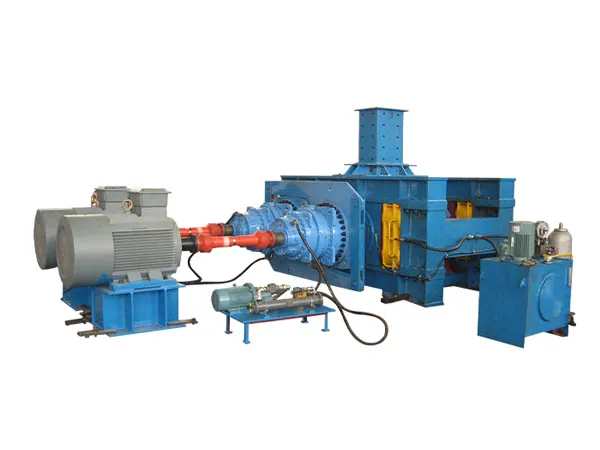
The right answer is rarely ideological. Many modern hard rock projects use both: HPGR for pre-grinding followed by ball milling, with SAG reserved for specific blends.
Project risk falls sharply when test work, machine sizing, and circuit simulation are done by the same team that will support commissioning. Work with a supplier who can provide pilot testing, wear modelling, and field commissioning support rather than a catalogue and a quotation. Suppliers such as ZYmining are typically evaluated on exactly these capabilities — documented references in hard rock, transparent wear projections, and responsive after-sales engineering.
A structured evaluation checklist helps:
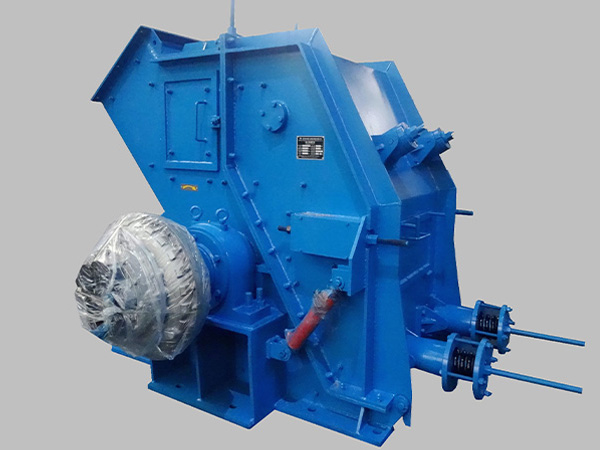
In some flowsheets, yes — particularly for dry, hard ores feeding a fine grinding stage. In others, HPGR works best as a pre-grinding step ahead of ball milling. The decision depends on ore testing and circuit simulation, not on a general rule.
Roll wear parts typically dominate, followed by power and maintenance labor. Abrasion testing and correct roll surface selection have more influence on cost than almost any other specification choice.
A properly run program — sampling, pilot testing, scale-up, and circuit design — usually spans several months. Compressing that timeline is possible but increases the risk of an undersized machine or premature roll wear.
Choosing HPGR for hard rock mining is a decision grounded in ore data, not marketing claims. Test the ore thoroughly, size the machine for the hardest domain rather than the average, specify roll surfaces against the abrasion index, and plan maintenance before the first shipment arrives. Done properly, HPGR delivers lower energy intensity, reduced water demand, and improved liberation — advantages that compound over the life of the mine. Done hastily, it delivers unexpected downtime and wear costs. The difference lies almost entirely in the quality of the selection process.
HPGR Roll Wear: Causes and Fixes
No information

Add: Luoxin Industrial Zone,Luoyang City,Henan Province P.R.C.
Tel: +86-379-67313306
E-mail: gloria@zyksjx.com

Official Agent of ZY MINING in Russia.
Please enter here.
Add: Luoxin Industrial Zone,Luoyang City,Henan Province P.R.C.
Tel: +86-379-67313306
E-mail: gloria@zyksjx.com