

ZYmining
-
Products
-
Application
Choosing the right crushing equipment for limestone is not just a technical decision—it directly affects production efficiency, operating costs, and final product quality. Many buyers hesitate between a compound crusher and a hammer crusher because both machines are widely used in medium and fine crushing stages. However, they differ significantly in working principles, performance, and application scenarios.
This guide explains those differences in a practical, experience-driven way, helping you decide which solution fits your limestone processing line.
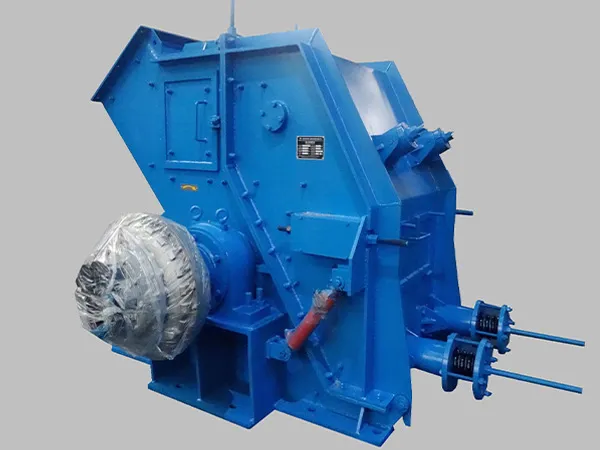
Limestone is a relatively soft to medium-hard material with a Mohs hardness of around 3–4. It breaks easily, but it also produces fine powder during crushing. Because of this, the ideal crusher should:
Deliver consistent particle size
Minimize excessive fines
Maintain stable output over time
Keep wear and maintenance costs under control
The choice between a compound crusher and a hammer crusher depends on how you prioritize these factors.
A compound crusher is a vertical shaft machine that combines impact crushing and grinding functions in one unit. It usually operates without a screen system, allowing material to pass through multiple crushing zones before discharge.
Key Features
Integrated crushing and shaping in one step
Adjustable discharge size through rotor speed or liner design
Lower sensitivity to moisture content
Simplified structure with fewer components
Advantages for Limestone
A compound crusher works particularly well when you need fine and uniform output. It reduces over-crushing because the material experiences multiple controlled impacts rather than aggressive single-stage strikes.
Operators often choose this machine in cement plants or sand-making lines where consistent granularity matters more than ultra-high throughput.
A hammer crusher uses high-speed rotating hammers to strike and break material. It typically includes a grate or screen at the bottom to control discharge size.
Key Features
High crushing ratio in a single stage
Strong impact force for rapid size reduction
Replaceable hammer heads and liners
Screen-based size control
Advantages for Limestone
A hammer crusher performs well in high-capacity operations. It quickly reduces large limestone chunks into smaller sizes, making it suitable for primary or secondary crushing stages.
Many quarry operators prefer hammer crushers because they handle bulk material efficiently and deliver high throughput with relatively simple operation.
1. Crushing Principle
Compound Crusher: Multi-layer impact and grinding
Hammer Crusher: High-speed impact with hammers
The compound crusher provides more controlled crushing, while the hammer crusher focuses on speed and force.
2. Output Size and Shape
Compound Crusher: More uniform, cubic particles
Hammer Crusher: Wider size distribution with more fines
If your downstream process requires consistent particle size, the compound crusher offers a clear advantage.
3. Capacity and Efficiency
Compound Crusher: Moderate capacity, stable output
Hammer Crusher: Higher capacity, faster throughput
Hammer crushers are better suited for large-scale production lines where volume matters most.
4. Wear and Maintenance
Compound Crusher: Lower wear rate due to distributed impact
Hammer Crusher: Higher wear on hammers and grates
Hammer heads in a hammer crusher require frequent replacement, especially when processing abrasive limestone with impurities.
5. Moisture Tolerance
Compound Crusher: Handles slightly wet materials without blockage
Hammer Crusher: Prone to clogging when moisture is high
This difference becomes critical in regions with humid climates or when processing raw limestone with water content above 8%.
6. Investment and Operating Cost
Compound Crusher: Slightly higher initial cost but lower maintenance
Hammer Crusher: Lower upfront cost but higher long-term wear expenses
The total cost of ownership often favors compound crushers in continuous operations.
There is no universal answer, but there is always a better choice for your specific scenario.
Choose a Compound Crusher if:
You need fine, uniform output (e.g., for cement or sand production)
You want lower maintenance frequency
Your material contains some moisture
You prioritize product quality over maximum capacity
Choose a Hammer Crusher if:
You require high throughput in a short time
Your limestone is dry and relatively clean
You operate in a quarry or primary crushing stage
You prefer lower initial investmen
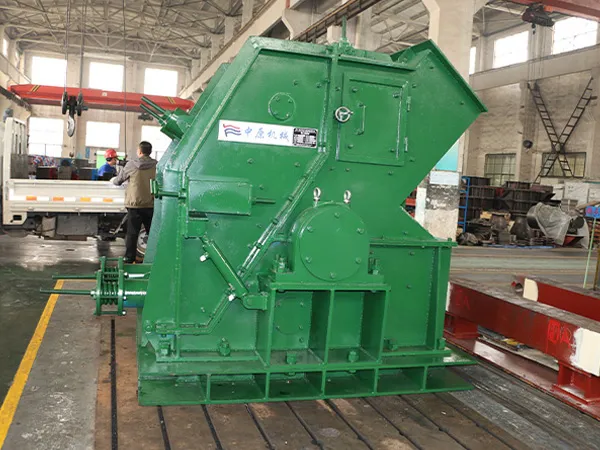
Many production lines do not rely on a single machine. Instead, they combine both crushers to balance efficiency and quality. For example:
A hammer crusher handles primary crushing
A compound crusher performs secondary or fine crushing
This configuration improves overall performance while reducing wear on each machine.
You should also evaluate:
Feed size and required output size
Daily production targets
Budget for maintenance and spare parts
Integration with existing equipment
A well-matched crusher setup often delivers more value than simply choosing the most powerful machine.
When processing limestone, the decision between a compound crusher and a hammer crusher depends on your operational priorities. If your goal is consistent product quality with controlled fines, a compound crusher is the better option. If your focus is high-capacity production with fast material reduction, a hammer crusher will serve you well.
The most effective approach is to align equipment selection with your long-term production strategy rather than short-term cost savings. A properly chosen crusher not only improves efficiency but also strengthens your entire processing line.
If you are planning a limestone crushing project and need a tailored solution, it is worth consulting with equipment specialists who can evaluate your material, capacity goals, and site conditions before making a final decision.

Add: Luoxin Industrial Zone,Luoyang City,Henan Province P.R.C.
Tel: +86-379-67313306
E-mail: gloria@zyksjx.com

Official Agent of ZY MINING in Russia.
Please enter here.
Add: Luoxin Industrial Zone,Luoyang City,Henan Province P.R.C.
Tel: +86-379-67313306
E-mail: gloria@zyksjx.com