

ZYmining
-
Products
-
Application
In modern aggregate production lines and mineral processing plants, a compound crusher often plays a critical role in achieving fine and medium crushing in a single stage. Operators and plant managers usually focus on capacity and wear parts, but discharge size control is just as important. If the discharge size is not properly adjusted, it can directly affect downstream processes, product quality, and overall plant efficiency.
This guide explains how to adjust the discharge size of a compound crusher in a practical, experience-based way. It also covers common challenges, real-world solutions, and optimization tips that help improve consistency, reduce downtime, and align with long-term operational goals.
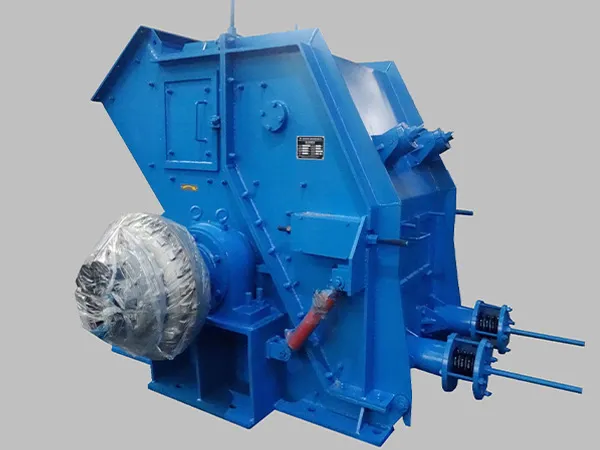
A compound crusher combines features of impact crushing and hammer crushing, which makes it highly efficient for brittle materials such as limestone, clinker, and coal gangue. However, this hybrid crushing principle also means that the final product size depends on multiple interacting factors.
When discharge size is too large, downstream equipment such as ball mills or vibrating screens must work harder, increasing energy consumption and wear. When discharge size is too small, over-crushing occurs, leading to excessive fines, material waste, and reduced profitability.
A well-adjusted discharge size ensures:
Stable product gradation
Lower energy consumption
Reduced wear on liners and hammers
Better compatibility with downstream equipment
Higher overall plant efficiency
Before making adjustments, it is important to understand what actually controls the output size in a compound crusher. Many operators attempt random adjustments without identifying the root cause, which often leads to unstable results.
1. Gap Between Crushing Components
The distance between the hammer head (or rotor) and the impact plate directly influences the final particle size. A smaller gap produces finer material, while a larger gap allows coarser particles to pass.
2. Rotor Speed
Rotor speed determines the impact force applied to the material. Higher speed increases crushing intensity and reduces particle size, but it also accelerates wear.
3. Hammer and Liner Wear
As wear parts degrade, the crushing efficiency decreases. Worn hammers reduce impact force, which results in larger discharge sizes even if the settings remain unchanged.
4. Feed Size and Uniformity
Irregular or oversized feed material affects crushing efficiency. If feed size exceeds the design limit, the crusher cannot achieve the expected discharge size consistently.
5. Material Properties
Hardness, moisture content, and brittleness all influence how material breaks. For example, wet materials tend to form aggregates, which increases discharge size unpredictably.
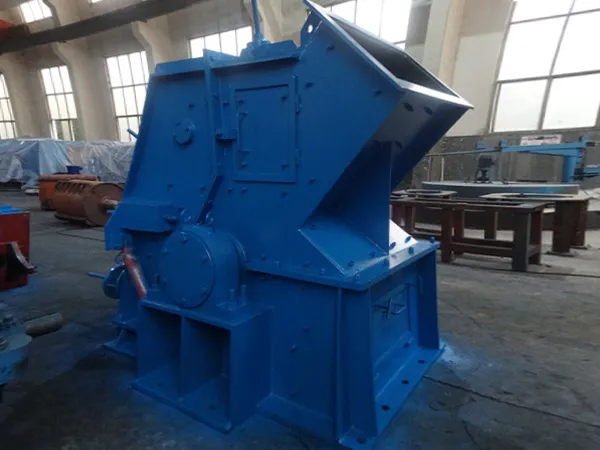
A systematic approach produces better results than trial-and-error adjustments. The following method reflects common best practices used in industrial plants.
Step 1: Inspect the Current Condition
Before making any adjustments, operators should inspect wear parts, rotor condition, and internal clearances. If components are heavily worn, adjustment alone will not solve the problem.
Step 2: Adjust the Impact Plate or Liner Gap
Operators should gradually modify the gap between the impact plate and rotor. They should avoid large changes at once. A small adjustment followed by testing provides more reliable control.
Step 3: Check Rotor Speed Settings
If the crusher supports variable speed control, operators can fine-tune rotor speed. Increasing speed helps reduce discharge size, but it must remain within safe operating limits.
Step 4: Control Feed Size and Rate
Operators should ensure that feed material meets the design specifications. Installing a pre-screen or feeder adjustment often stabilizes discharge size more effectively than internal crusher adjustments.
Step 5: Perform Test Runs and Measure Output
After each adjustment, operators should run the machine under normal load conditions and measure the particle size distribution. Consistent testing prevents over-adjustment.
Even with proper adjustment, some issues still occur in real production environments. Understanding these problems helps operators respond quickly.
Problem 1: Discharge Size Fluctuates Frequently
This usually results from inconsistent feed size or uneven material flow. Operators should stabilize feeding conditions and check feeder performance.
Problem 2: Output Remains Too Coarse
This may indicate worn hammers or insufficient rotor speed. Replacing wear parts or increasing speed often resolves the issue.
Problem 3: Excessive Fine Material
This typically occurs when the gap is too small or rotor speed is too high. Adjusting these parameters can restore balance.
Problem 4: High Energy Consumption
Over-crushing or improper settings increase power usage. Operators should optimize the balance between crushing intensity and desired output size.
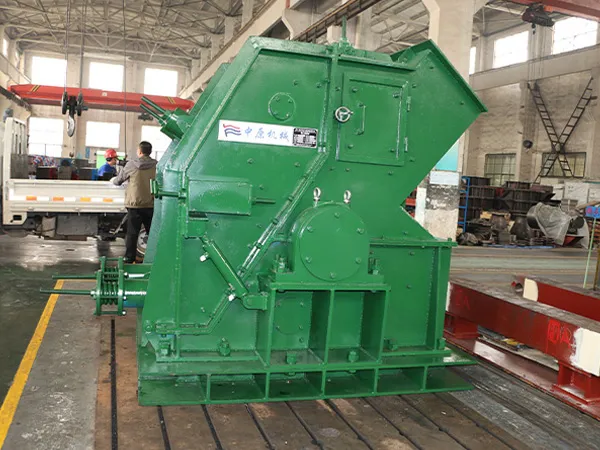
Experienced operators often rely on small but effective practices that are not always documented in manuals.
Operators should always record adjustment parameters and corresponding output results. This creates a reference database for future optimization.
Maintenance teams should replace wear parts before they reach critical wear limits, not after performance drops.
Plant managers should align discharge size targets with downstream equipment requirements rather than focusing only on crusher performance.
Engineers should consider installing automation systems that monitor and adjust crusher parameters in real time.
Adjusting discharge size is not a one-time task. It requires continuous monitoring and optimization. Plants that achieve stable production usually follow a structured approach.
First, they establish standard operating procedures for adjustment and testing. Second, they train operators to understand the relationship between machine parameters and output quality. Third, they integrate maintenance schedules with performance targets.
By combining these practices, companies can maintain consistent discharge size, reduce operational risks, and improve profitability.
Adjusting the discharge size of a compound crusher requires more than simple mechanical changes. It involves understanding the interaction between machine structure, material characteristics, and operational parameters.
Operators who take a systematic approach can achieve stable output, reduce unnecessary wear, and improve overall plant efficiency. Instead of relying on guesswork, they should focus on controlled adjustments, regular inspections, and data-driven optimization.
A well-maintained and properly adjusted compound crusher not only delivers the desired product size but also becomes a reliable contributor to long-term production success.

Add: Luoxin Industrial Zone,Luoyang City,Henan Province P.R.C.
Tel: +86-379-67313306
E-mail: gloria@zyksjx.com

Official Agent of ZY MINING in Russia.
Please enter here.
Add: Luoxin Industrial Zone,Luoyang City,Henan Province P.R.C.
Tel: +86-379-67313306
E-mail: gloria@zyksjx.com