

ZYmining
-
Products
-
Application
Industrial dust generated from mining, metallurgy, cement, and other manufacturing processes has long been treated as a waste liability. Traditional disposal methods—landfilling or stockpiling—carry escalating costs, environmental liabilities, and the loss of potentially valuable materials. High-pressure briquetting presents a proven alternative: instead of paying to bury dust, plants can convert fine particles into dense, durable briquettes that are easy to handle, transport, and often recycle back into production. This article examines how high-pressure briquetting eliminates the need for landfill, reduces operational risk, and creates a positive return on investment. ZYmining, a specialist in industrial briquetting technology, provides engineered solutions for this transition.
Landfilling industrial dust is not merely a disposal method—it is a compounding liability. Regulatory frameworks worldwide are tightening restrictions on waste sent to landfills, particularly for fine dusts that can become airborne or leach contaminants. Many jurisdictions now impose high tipping fees, require pre-treatment, or ban certain dust types from landfills entirely. For a mid-sized plant generating thousands of tons of dust annually, landfill costs can easily exceed several hundred thousand dollars per year, and these costs trend upward.
Environmental agencies increasingly classify industrial dust as a hazardous or special waste due to its particle size and potential chemical composition. This classification demands specialized handling, manifesting paperwork, and often off-site treatment before landfilling. Fines for non-compliance can be severe, and public scrutiny around corporate sustainability adds reputational risk. Meanwhile, landfill space shrinks, and hauling distances grow, further inflating operational expenses.
Perhaps the most overlooked aspect of landfilling is the loss of valuable materials. Many industrial dusts contain recoverable metals, minerals, or carbon content. For example, dust from steelmaking (EAF dust, blast furnace dust) contains iron and zinc; cement kiln dust contains calcium and silica; and carbon-based dust can serve as fuel. When sent to landfill, these materials are permanently lost. High-pressure briquetting can recover a significant portion of that value, offsetting processing costs.
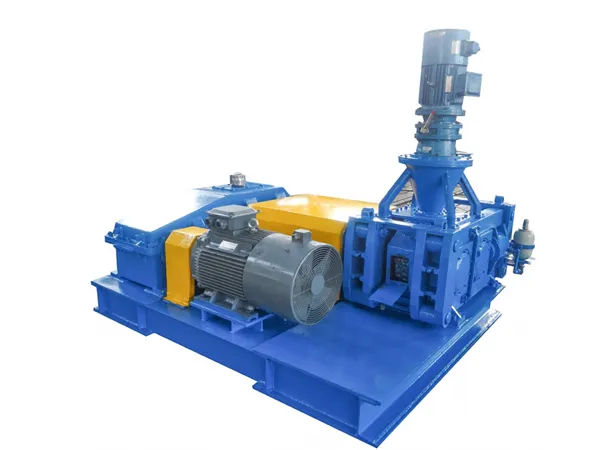
High-pressure briquetting uses mechanical force—typically from hydraulic or mechanical presses—to compress fine, dry or slightly moist particles into a cohesive solid shape without the need for high-temperature sintering. The process densifies the material, creating briquettes with sufficient strength for handling, transportation, and reintroduction into industrial processes such as smelting, sintering, or chemical reactions.
The key mechanism is inter-particle bonding under extreme pressure. As dust particles are forced together in a confined die cavity (the briquetting roller mold), the distance between particles decreases until van der Waals forces, mechanical interlocking, and in some cases localized melting or chemical bonding take effect. Binders may be added in small amounts (typically 1–5%) to enhance bonding, but many dusts can be briquetted without binders due to their inherent plasticity or reactive surfaces. The result is a briquette with bulk density 2–5 times higher than the original dust, dramatically reducing volume and making the material flowable and stackable.
High-pressure briquetting has been successfully applied to a wide range of industrial dusts, including: steel mill dust (EAF, BOF, blast furnace), aluminum dross fines, cement kiln dust, lime dust, carbon black, coal fines, coke breeze, iron ore fines, manganese dust, ferroalloy dust, foundry dust, and many others. The technology is particularly effective for materials with particle sizes below 1 mm and moisture content below 5–10% (depending on the material). ZYmining's testing lab can evaluate specific dust samples to determine briquetting feasibility and optimize parameters.
To illustrate the decisive benefits, the following comparison highlights the main differences between landfilling and high-pressure briquetting for industrial dust management.
These advantages make high-pressure briquetting a transformative change from a cost center (landfill) to a profit center (valuable briquettes).
ZYmining has been engineering and manufacturing high-pressure briquetting systems for over a decade, serving industries ranging from steel to cement and chemicals. The company's approach combines robust mechanical design with process expertise to ensure reliable, continuous operation under harsh industrial conditions.
ZYmining offers a range of briquetting press models with capacities from 1 ton per hour to over 50 tons per hour. Each system is customized to the specific dust's properties—particle size distribution, moisture, temperature, and chemical composition. Configurations include pre-conditioning mixers, binder dosing systems, material feeders, and post-briquetting screens to handle fine returns. All machine components use wear-resistant materials to extend service life.
ZYmining's clients report briquette strength of 80–120 kg/cm² (depending on material), enabling smooth handling and transportation. The presses feature automatic hydraulic pressure compensation to maintain consistent briquette density. ZYmining provides on-site commissioning, operator training, and a global spare parts network. The company also offers a feasibility testing service: clients can send dust samples for briquetting trials to confirm performance before investing.
For facilities currently landfilling dust, the decision to move to high-pressure briquetting is validated by a clear financial model. ZYmining's engineering team can help calculate the payback period based on actual dust generation rates, local disposal costs, and potential material recovery revenue.
High-pressure briquetting offers a definitive answer to the old problem of industrial dust disposal. By transforming a costly waste stream into a handled, transported, and often reusable product, companies can eliminate landfill dependency, reduce environmental risk, and improve their bottom line. The technology is mature, the equipment is reliable, and the economic case has been proven across many industries. ZYmining stands ready to support this transition with engineered briquetting systems tailored to each plant's dust characteristics and production goals. For decision-makers seeking to eliminate landfill and turn dust into an asset, high-pressure briquetting is the most direct path forward.

Add: Luoxin Industrial Zone,Luoyang City,Henan Province P.R.C.
Tel: +86-379-67313306
E-mail: gloria@zyksjx.com

Official Agent of ZY MINING in Russia.
Please enter here.
Add: Luoxin Industrial Zone,Luoyang City,Henan Province P.R.C.
Tel: +86-379-67313306
E-mail: gloria@zyksjx.com