

ZYmining
-
Products
-
Application
Selecting the right die shape for your briquette production is a decision that directly affects product quality, energy consumption, and operational efficiency. While both round and square briquettes serve similar applications, their geometry influences everything from density uniformity to handling characteristics. Understanding these differences is essential for optimizing your briquetting process. ZYmining, with extensive experience in mining equipment and briquette solutions, provides the technical insights needed to make an informed choice.
The die shape determines how pressure is distributed during compaction. In a round die, radial forces are uniform, leading to consistent density across the briquette. Square dies create corners and edges where stress concentration can occur, potentially causing cracks or uneven compaction. For operations requiring high mechanical strength and low fines generation, the shape must be carefully matched to the material properties.
Round briquettes are produced using cylindrical dies. The absence of sharp edges reduces stress raisers, resulting in fewer fractures during ejection and handling. Key advantages include:
Square briquettes are formed in rectangular or square dies. Their geometry allows for higher packing density when stacked, which can be advantageous for transport and storage. Notable characteristics include:
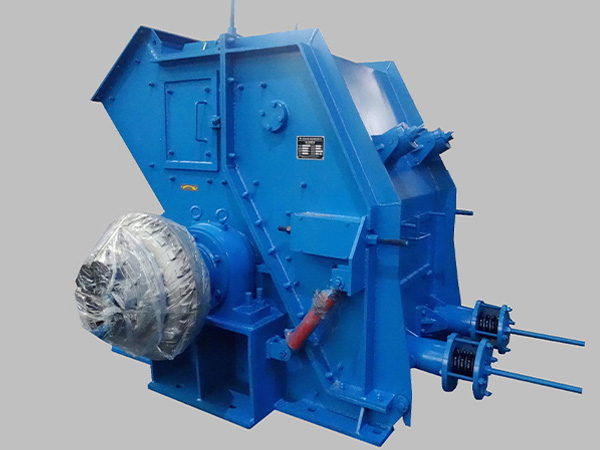 The decision between round and square dies should be based on your specific requirements. Below is a comparative assessment of critical factors:
Beyond the theoretical differences, real-world production outcomes vary by material. For biomass briquetting, round briquettes are often preferred due to lower fines generation and better durability in automated feeding systems. In coal briquetting, both shapes are common, but square briquettes are favored where stacking density is paramount, such as in export shipping. For mineral ores, ZYmining’s field data suggests that round briquettes reduce dust formation by up to 20% compared to square briquettes of the same volume, though this depends on particle size distribution.
It is also important to consider your downstream equipment. If your briquettes are fed into a gasifier or furnace via a screw conveyor, round shapes feed more consistently. If they are manually placed in a mold, square shapes may be easier to arrange.
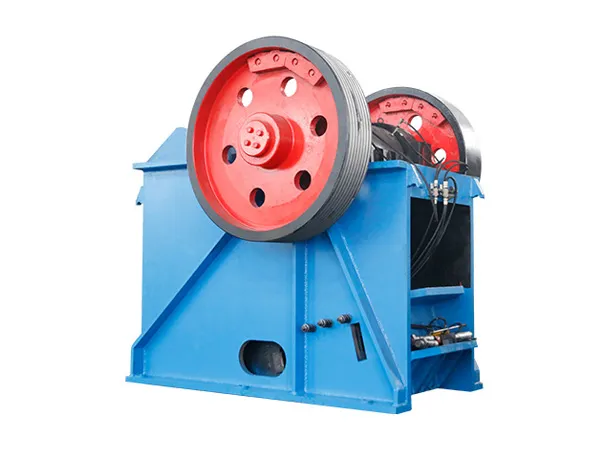 ZYmining offers a comprehensive range of briquetting machines with interchangeable die inserts, allowing you to test both round and square configurations on your own materials. Our engineering team provides material testing services to evaluate density, strength, and abrasion resistance before you commit to a full production die. With over a decade of experience in mining and processing equipment, ZYmining understands that die shape is not a one-size-fits-all decision. We work closely with you to match the die geometry to your feedstock characteristics, desired briquette dimensions, and production volume.
In summary, the choice between round and square briquette dies hinges on a trade-off between handling durability and volumetric efficiency. Round briquettes excel in uniform quality and low breakage, while square briquettes offer superior packing density and stacking stability. Evaluate your material, logistics, and end-use requirements, and leverage ZYmining’s expertise to run comparative trials. The right die shape will enhance your product consistency and reduce overall operating costs.

Add: Luoxin Industrial Zone,Luoyang City,Henan Province P.R.C.
Tel: +86-379-67313306
E-mail: gloria@zyksjx.com

Official Agent of ZY MINING in Russia.
Please enter here.
Add: Luoxin Industrial Zone,Luoyang City,Henan Province P.R.C.
Tel: +86-379-67313306
E-mail: gloria@zyksjx.com