

ZYmining
-
Products
-
Application
Controlling the density of balls in a ball press machine is critical for producing consistent, high-quality pellets. Whether you manufacture fertilizer, feed, or other granular products, small adjustments can significantly impact production efficiency, reduce material loss, and improve product durability. This guide provides step-by-step, real-world techniques to help you optimize ball density.
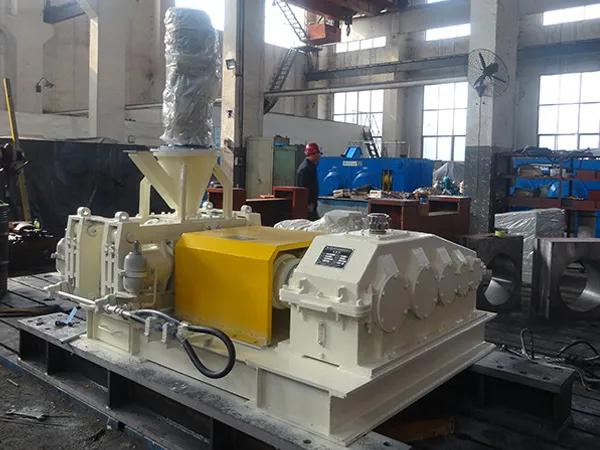
Ball density determines how compact the material is inside each pellet. High-density balls:
Resist breakage during transport
Ensure uniform distribution of nutrients or active ingredients
Reduce material waste
Low-density balls, on the other hand, can crumble easily, lowering efficiency and increasing costs. Achieving uniform density requires careful control of material properties, machine settings, and production processes.
Why it matters:
Moisture acts as a binding agent. Too little water = loose, brittle balls. Too much water = sticky, deformed balls.
Practical tips:
Conduct small batch tests to find the ideal moisture range.
Use a moisture meter for consistent measurement.
Adjust water gradually—avoid adding all at once.
Monitor environmental factors like humidity, which can affect moisture absorption.
Real-world example:
In feed pellet production, increasing moisture from 12% to 14% improved ball hardness by 15% without causing stickiness.
Why it matters:
Roller pressure compresses raw material into dense balls. Too low = loose balls, too high = machine wear.
How to adjust:
Start with manufacturer’s recommended pressure.
Gradually increase while checking ball hardness.
Avoid sudden changes; monitor energy consumption.
Combine with moisture optimization for best results.
Tip: Log each batch’s roller pressure and corresponding ball hardness for easy replication.
Why it matters:
Feeding rate affects how evenly material is distributed between rollers. Uneven feed = inconsistent ball density.
Practical steps:
Keep feed hoppers clean and unclogged.
Use variable-speed feeders to match material flow with roller speed.
Monitor for surges or drops during production.
Pro insight: Even minor blockages can cause a 10–15% drop in production quality.
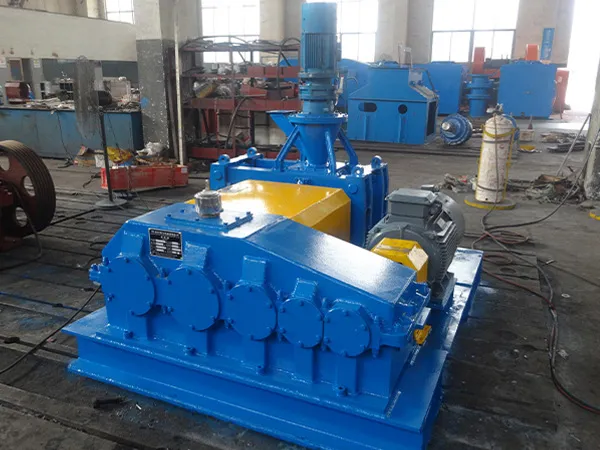
Roller Speed: Slower rollers give material more time to compress → higher density.
Granule Size: Fine, uniform granules compact more efficiently than large, irregular particles.
Adjustment tips:
Screen materials to ensure consistent granule size.
Conduct small tests to find the ideal roller speed.
Adjust speed and granule size together—they interact directly.
Example: For fertilizer pellets, reducing roller speed by 10% while using 2mm granules increased density by 12%.
Even perfect settings fail if the machine is poorly maintained.
Maintenance checklist:
Inspect rollers for wear or surface damage.
Check bearings and lubrication.
Ensure hydraulic/mechanical pressure systems operate correctly.
Calibrate pressure and feed rate periodically.
Pro tip: Routine maintenance can extend roller life and reduce energy costs by 15–20%.
Regular testing ensures consistent output.
What to do:
Measure hardness and density of balls for each batch.
Record all parameters (moisture, pressure, feed rate, roller speed).
Use data to replicate successful runs.
Optional: Create a tracking chart to visualize trends and detect anomalies early.
|
Problem |
Likely Cause |
Solution |
|
Balls crumble easily |
Low moisture / low pressure |
Increase moisture slightly; raise roller pressure |
|
Balls stick or deform |
Excess moisture / high pressure |
Reduce water; adjust pressure down |
|
Uneven ball density |
Uneven feed |
Clean hopper; match feed rate to roller speed |
|
Machine vibration / noise |
Worn rollers / misalignment |
Inspect and replace rollers; check calibration |
Optimizing ball density in a ball press machine requires a mix of material control, precise machine settings, and consistent maintenance. By focusing on:
Moisture content
Roller pressure
Feed rate
Roller speed
Granule size
Regular machine maintenance
…you can produce uniform, durable, high-quality pellets efficiently while reducing operational costs.
Tip for Manufacturers: Keep detailed logs of all adjustments and outcomes—they become your roadmap to repeatable, high-efficiency production.
Bonus: Drive Your Production Forward
Looking for reliable ball press machines and expert guidance to achieve consistent pellet quality? Contact us today for tailored solutions and technical support to boost your production efficiency.

Add: Luoxin Industrial Zone,Luoyang City,Henan Province P.R.C.
Tel: +86-379-67313306
E-mail: gloria@zyksjx.com

Official Agent of ZY MINING in Russia.
Please enter here.
Add: Luoxin Industrial Zone,Luoyang City,Henan Province P.R.C.
Tel: +86-379-67313306
E-mail: gloria@zyksjx.com