

ZYmining
-
Products
-
Application
en
Cement plants face constant pressure to cut specific power consumption while holding clinker quality and throughput steady. For many producers, the most effective lever is not the kiln but the mill circuit, and specifically the way clinker is prepared before final grinding. High pressure grinding rolls (HPGR) apply compressive force strong enough to fracture particles along internal flaws, producing a feed that downstream mills handle far more easily. The technology is now standard in new cement lines and is increasingly retrofitted into existing ball mill circuits. This guide explains how HPGR works on clinker, what performance gains are realistic, and which equipment decisions determine whether the investment pays back on schedule.
An HPGR is a compression machine, not an impact mill. Two counter-rotating rolls, one fixed and one floating on hydraulic rams, draw material into a narrowing gap and press it into a dense, compacted cake. Pressure is applied to the particle bed rather than to individual stones, so particles fracture each other as well as the roll surface. That is why the process is described as comminution on a bed of material rather than on a single particle.
Because force is distributed across the bed, HPGR achieves a high reduction ratio with relatively low wear per tonne compared with impact-based equipment. The output is a flake or cake of compacted clinker that breaks down readily in the next grinding stage. Inside those flakes, particles carry micro-cracks that reduce the effective resistance of the downstream feed to further breakage. In practice, this is where most of the energy saving comes from: the HPGR does the coarse, energy-hungry work, and the ball mill or vertical mill finishes the job on a pre-weakened material.
Three configurations dominate cement applications, and the choice depends on target fineness, available floor space and existing equipment:
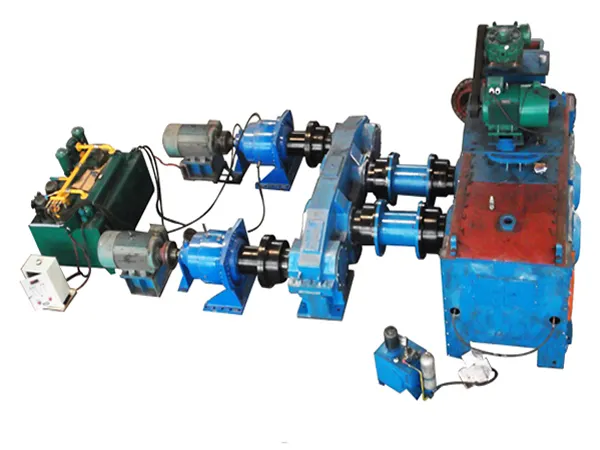
The comparison that matters is not HPGR versus ball milling in the abstract, but HPGR plus a finishing mill versus a finishing mill alone. When evaluated on that basis, the advantages are consistent across clinker, limestone, slag and blended cements.
Reported savings vary with circuit design, clinker chemistry and target fineness, but the direction is always the same: moving coarse reduction to an HPGR reduces total kWh per tonne of cement. The gain is largest where the finishing mill was previously handling material far coarser than its optimum feed size. Plants that measure their own baseline carefully before and after commissioning consistently find the largest improvements in the coarse end of the circuit, not in final grinding.
For a plant running at its separator or mill limit, HPGR pre-grinding is often the cheapest way to add capacity without a new mill. Double-digit percentage increases in mill throughput are regularly reported when the rolls, separator and recirculation are correctly sized as a system. Sizing errors, by contrast, show up as unstable roll operation, excessive recirculation or a finishing mill that still runs at its old limit.
HPGR operates at a lower grinding temperature than high-speed impact mills, which limits premature gypsum dehydration and keeps the material cooler into the separator and mill. The resulting particle size distribution is typically narrower and more predictable, which helps with setting time, strength development and water demand in the finished cement. Quality teams should still validate each new circuit with standard physical tests, because clinker from different kilns responds differently to the same pressure and speed settings.
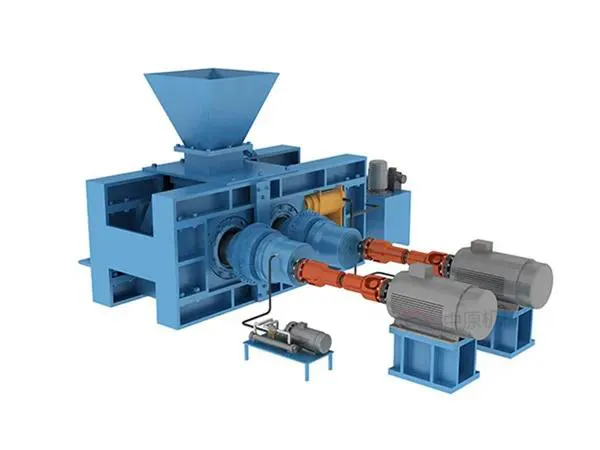
The rolls are the only components in continuous contact with a hard, abrasive clinker bed at high pressure. Roll surface condition drives throughput, product quality and maintenance cost more than any other single factor, so the specification and rebuild strategy deserve as much attention as the machine frame.
Studded roll surfaces, usually tungsten carbide pins set into a tough base material, create the friction needed to grip the material and pull it into the gap. As studs wear, the nip angle changes, throughput falls and the machine starts to slip rather than compress. Hardfaced or welded surfaces offer different wear profiles and are sometimes chosen for abrasive or highly variable feeds. The right choice depends on feed size distribution, moisture and the required operating pressure.
A planned programme of stud replacement and roll refurbishment keeps the machine at design pressure without unplanned stops. Operators who monitor roll diameter, stud height and hydraulic pressure trends can schedule rebuilds during normal kiln stops instead of reacting to a sudden capacity drop. ZYmining supplies HPGR rolls, stud assemblies and wear components for cement clinker and mineral duty, and works with plant teams to match a roll surface specification to the actual feed and duty cycle rather than a generic catalogue rating.
Retrofitting HPGR into an operating plant is a system project, not an equipment purchase. The following sequence avoids the most common mistakes:
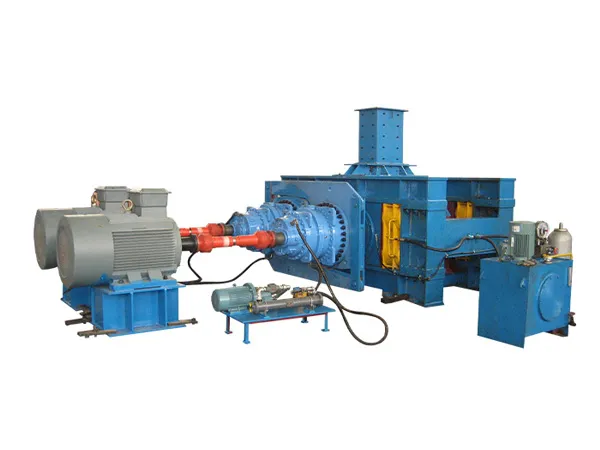
Yes. Pre-grinding retrofits are one of the most common HPGR applications in cement. The main constraints are available space, conveying layout and the ability of the existing separator and mill internals to handle a finer, more uniform feed.
Interval depends on pressure, feed abrasiveness and the roll surface type, but most cement operations plan stud or surface work during scheduled kiln stops. Condition monitoring based on stud height and pressure trends gives a far better forecast than a fixed calendar.
When the circuit is correctly configured and gypsum dehydration is controlled, cement performance is comparable to conventionally ground product and often more consistent. Each new installation should still be validated with standard setting time and strength tests on the specific clinker.
HPGR delivers its value through the whole circuit, not through the rolls alone. Plants that define a clear baseline, size the rolls and separator as one system, and manage roll surface condition as a planned maintenance activity capture the energy and throughput gains within the first operating year. ZYmining supports that work by supplying HPGR rolls and wear parts built for cement clinker duty, so the machine keeps running at design pressure for longer between rebuilds.
Choosing HPGR for Hard Rock Mining
No information

Add: Luoxin Industrial Zone,Luoyang City,Henan Province P.R.C.
Tel: +86-379-67313306
E-mail: gloria@zyksjx.com

Official Agent of ZY MINING in Russia.
Please enter here.
Add: Luoxin Industrial Zone,Luoyang City,Henan Province P.R.C.
Tel: +86-379-67313306
E-mail: gloria@zyksjx.com