

ZYmining
-
Products
-
Application
HPGR circuits are judged on two numbers: throughput and specific energy consumption. When production targets are missed, the first instinct is usually capital — a larger motor, a second machine, an extra screening stage. In practice, most high pressure grinding rolls lose a meaningful share of their capacity to factors that cost nothing to correct: an unstable feed, worn roll surfaces, a drifting hydraulic set point, and maintenance habits that keep the machine running below its design envelope. This article focuses on those recoverable losses, and on how to capture them without adding a single line item to the budget.
Before changing anything, establish where the losses actually sit. Most plants already hold the evidence in their control system historian: throughput, circulating load, specific pressing force, hydraulic pressure, roll gap, roll speed, and motor power, all logged at one-second or one-minute intervals.
Three questions usually reveal the problem quickly:
A gradual rise in specific energy with a simultaneous fall in throughput almost always points to roll surface condition rather than to the machine's fundamental capability. A rapid, step-change loss usually points to feed or hydraulics. Distinguishing between the two is what keeps the fix free.
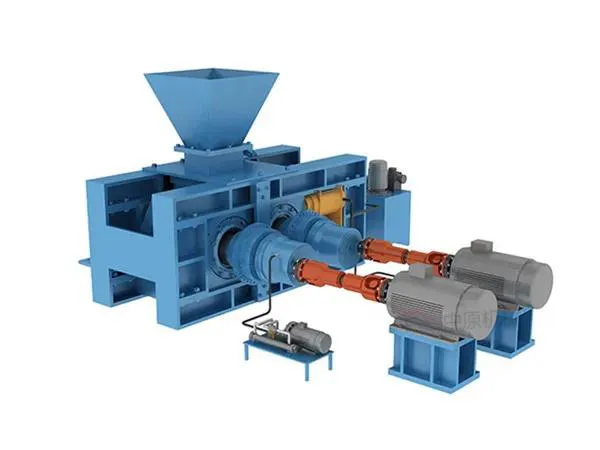
An HPGR is not a crusher that tolerates variability well. Its efficiency depends on a consistent, choke-fed material bed being drawn into the nip under pressure. Every interruption in that bed — a slug of fines, a gap in the feed, a surge from the bin — costs compression events that cannot be recovered later in the circuit.
Segregation in the feed bin is one of the most common and most overlooked causes of unstable HPGR operation. When coarse material rolls to the edges of the bin and fines sit in the center, the roll gap has to continuously re-adjust, and the hydraulic system spends its energy on regulation rather than on comminution. Correcting discharge geometry, keeping bin level within a consistent operating band, and avoiding partial draw from one side of the bin cost nothing but attention.
Oversize material prevents a uniform bed from forming, while excessive moisture promotes slipping at the roll surface and sticky build-up around the cheek plates. Both push the machine outside its efficient window. The fix is disciplined upstream control: keep the top size within the OEM's recommended relationship to roll diameter, and manage moisture in a narrow band rather than adding water as a blanket solution. In many circuits, simply tightening the upstream crusher setting or adjusting a dewatering step recovers several percentage points of throughput.
The roll surface is the only part of the HPGR that does work. When it degrades, throughput falls even though every other parameter appears normal, which is why surface condition is so often misdiagnosed as a machine limitation.
Studded roll surfaces grip the material and draw it into the compression zone. As studs wear down, grip falls, the nip becomes less effective, and the rolls begin to slip. The result is lower throughput at the same power draw, plus a coarser and less micro-cracked product that transfers extra load to downstream grinding stages. Monitoring stud height and pattern during planned stops is free. Regenerating a worn surface by rebuilding the stud pattern is a fraction of the cost of a new roll body and typically restores throughput to near-design levels. ZYmining supports this work with roll surface assessment and stud regeneration programs that keep existing rolls in service far longer than a replacement cycle would suggest.
Material that escapes at the roll edges receives little or no compression. As edge wear rings and cheek plates wear, that escape path widens, and a growing share of the feed passes through the machine unground while still consuming energy. Checking edge clearances during routine inspections and replacing worn cheek plates on schedule protects throughput at a very low cost per tonne.
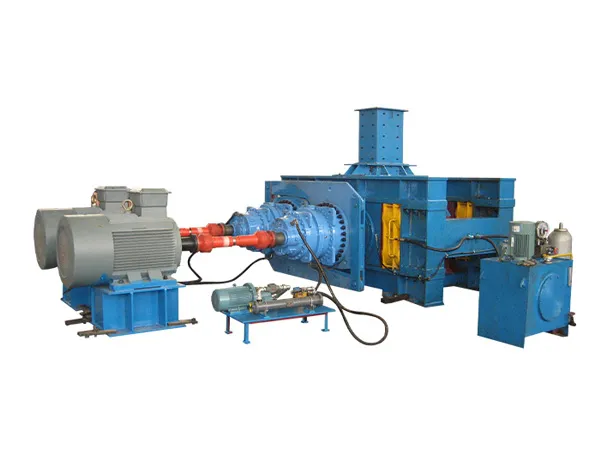
Hydraulic pressure and roll speed define the operating window. Both contain throughput that is already paid for.
Equally important is stability of the hydraulic circuit itself. Hydraulic accumulators with incorrect precharge, oil that runs too hot, or slow-responding gap control all produce pressure fluctuations that prevent a steady bed from forming. Verifying accumulator precharge, oil temperature, and control loop tuning is nearly free and often recovers throughput that operators have assumed was permanently lost.
Recovered throughput disappears again quickly if it is not protected. Bearing lubrication intervals, seal condition, bolt torque on roll assemblies, and the alignment of feed chutes all influence the stability of the compression zone. So does spare parts planning: an HPGR that waits two weeks for a cheek plate is an HPGR running at reduced capacity for two weeks.
Working with a supplier that understands both the metallurgy and the operational context shortens that window. ZYmining supplies HPGR wear parts — roller studs, edge wear rings, cheek plates, and roll assemblies — and pairs them with application guidance, so replacement decisions are based on measured wear rates rather than on fixed calendar intervals. That approach keeps availability high and cost per tonne low without adding capital expenditure.
Yes. In most circuits, the largest recoverable losses come from feed instability, worn roll surfaces, and drifting hydraulic settings — all correctable with existing equipment.
Watch for rising specific energy alongside flat or falling throughput, a coarser product size distribution, and visible slipping at the nip. Stud height measurements taken during planned stops confirm the diagnosis.
No. Beyond a certain point, extra pressure adds energy consumption and wear risk without a proportional throughput gain. The objective is a stable, correctly sized bed at the lowest pressure that delivers the target product.
When the roll body and bearing journals remain sound and the loss is confined to the surface. Stud regeneration and edge component replacement restore performance at a fraction of new-roll cost.
Maximizing HPGR throughput without extra cost is a discipline rather than a project. Audit the data you already collect, stabilize the feed, keep the roll surface working as designed, and hold the hydraulic window steady. Then protect those gains with wear part planning that reflects real operating conditions. Plants that follow this sequence routinely find that the capacity they were looking for was already inside the machine — it was simply being consumed by avoidable losses.
HPGR in Cement: Boost Clinker Grinding
No information

Add: Luoxin Industrial Zone,Luoyang City,Henan Province P.R.C.
Tel: +86-379-67313306
E-mail: gloria@zyksjx.com

Official Agent of ZY MINING in Russia.
Please enter here.
Add: Luoxin Industrial Zone,Luoyang City,Henan Province P.R.C.
Tel: +86-379-67313306
E-mail: gloria@zyksjx.com