

ZYmining
-
Products
-
Application
In modern industrial processes, the production of briquettes plays a critical role in ensuring material handling efficiency, energy utilization, and cost-effectiveness. Among the various factors influencing briquette performance, the shape and size of the balls used in briquetting machines are of paramount importance. Industrial operators increasingly recognize that customized ball shapes and sizes are not merely aesthetic choices—they are pivotal for optimizing the entire production workflow and improving the quality of the final product.
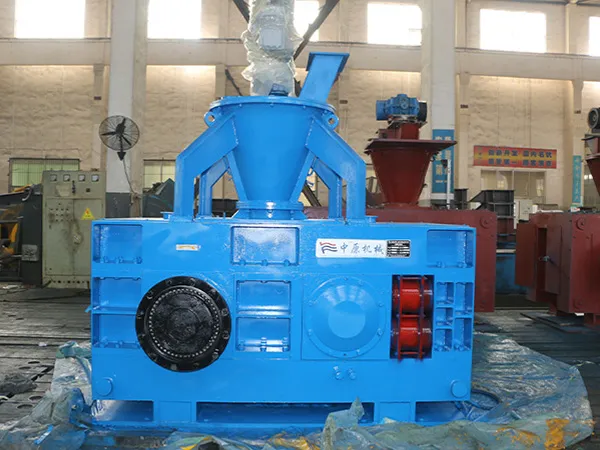
Briquetting machines, whether used in metallurgy, cement production, or biomass fuel processing, rely on precise compaction and uniformity to achieve maximum efficiency. Standardized, off-the-shelf balls often fail to meet the unique needs of different production lines. By tailoring the ball shape—be it spherical, cylindrical, oval, or even multi-faceted—manufacturers can:
Enhance Compression Consistency: Customized shapes ensure even pressure distribution during the briquetting process. This leads to briquettes with uniform density, which improves combustion efficiency and material strength.
Reduce Material Wastage: Misaligned or poorly shaped balls can cause uneven compaction, resulting in excess material loss during processing. Optimized shapes minimize these inefficiencies.
Improve Machine Longevity: Machines experience less wear when balls match the design specifications of the press or roller system. Properly shaped balls reduce friction and mechanical stress, lowering maintenance costs and downtime.
Alongside shape, the size of the balls used in briquetting operations significantly affects both the quality and consistency of industrial briquettes. Smaller balls may provide finer compression and more uniform density but can increase processing time if the production volume is high. Conversely, larger balls allow for faster throughput but can compromise uniformity if not carefully calibrated.
Custom sizing offers several advantages:
Optimized Production Rates: Adjusting ball size to match material flow and machine speed can boost throughput without sacrificing briquette quality.
Energy Efficiency: Correctly sized balls reduce the force required for compression, lowering energy consumption per ton of briquettes.
Application-Specific Performance: Different industries demand specific briquette properties. For instance, metallurgical briquettes require high-density and robust structural integrity, while biomass briquettes prioritize uniform burning and low ash content. Customized ball sizes allow manufacturers to fine-tune these properties according to industry requirements.

The selection of ball materials is as critical as the shape and size. High-wear alloys or specialized steel may be required for metal briquetting, while corrosion-resistant materials suit biomass or chemical briquettes. Advanced customization techniques, including CNC machining, forging, and precision casting, allow manufacturers to produce balls that meet strict tolerances and industry-specific standards.
In addition, modern quality control methods, such as 3D scanning and computer-aided modeling, enable engineers to simulate the compression process and predict the performance of different ball configurations before production. This proactive approach reduces trial-and-error cycles and ensures that the final product consistently meets the intended specifications.
Investing in customized ball shapes and sizes brings tangible benefits to industrial operations:
Enhanced Product Quality: Uniform briquettes with consistent density and shape improve handling, storage, and transport efficiency.
Cost Savings: Reduced material waste and machine wear translate directly into lower operational costs.
Sustainability: Optimized compression reduces energy consumption, contributing to a greener, more sustainable production process.
Competitive Edge: Businesses offering tailored briquette solutions can better meet client demands and stand out in a crowded industrial marketplace.
As industries continue to embrace automation and precision manufacturing, the demand for customized ball shapes and sizes in briquetting processes will only grow. Future innovations may include smart materials capable of adaptive compression, AI-assisted design simulations for perfect compaction, and hybrid shapes tailored for multi-material briquetting. Companies that invest early in these technologies will likely see improved efficiency, lower costs, and higher client satisfaction.
For businesses seeking to enhance their briquetting operations, exploring customized solutions is no longer optional—it is a strategic necessity. Working with experienced manufacturers to define ball shapes, sizes, and materials ensures that every briquette meets the highest standards of performance, consistency, and durability.
If you are ready to elevate your industrial briquetting process, contact our team today to discuss customized ball designs tailored to your specific application. With precision-engineered solutions, you can achieve higher efficiency, lower costs, and a more sustainable production line—delivering results that truly make a difference.

Add: Luoxin Industrial Zone,Luoyang City,Henan Province P.R.C.
Tel: +86-379-67313306
E-mail: gloria@zyksjx.com

Official Agent of ZY MINING in Russia.
Please enter here.
Add: Luoxin Industrial Zone,Luoyang City,Henan Province P.R.C.
Tel: +86-379-67313306
E-mail: gloria@zyksjx.com